

The Weldon Amendment and the Restriction of Abortion Rights in the U.S.

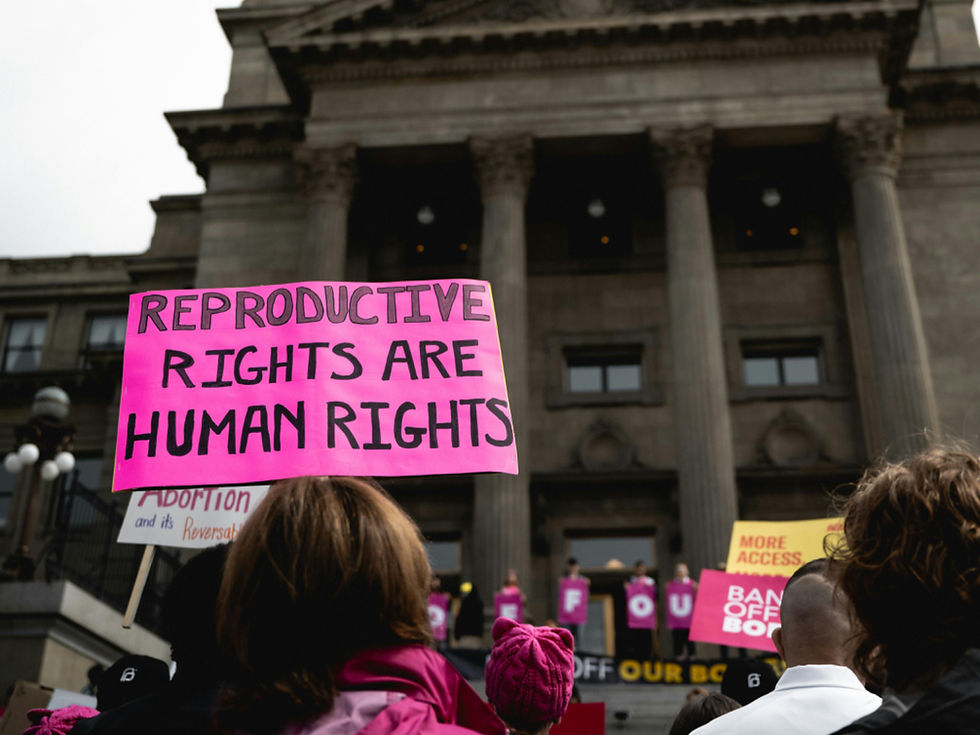
In recent years, abortion rights in the U.S. have been increasingly shaped by controversial political and legal decisions. The Weldon Amendment, in particular, plays a key role in complicating access to abortion care.
This U.S. federal provision blocks access to federal funding by the U.S. Department of Health and Human Services (HHS) to “Federal agency or program, or to a State or local government, if such agency, program, or government subjects any institutional or individual health care entity to discrimination on the basis that the health care entity does not provide, pay for, provide coverage of, or refer for abortions.”
In practice, the Weldon Amendment prohibits the aforementioned bodies and entities from “discriminating” against health care-related plans, institutions or professionals that may refuse to perform or facilitate access to abortion care to patients, using the protection of “ conscience” and “religious freedom” as its main argument.
Introduced by anti-abortion former U.S. Representative David Weldon in 2005, the Weldon Amendment has since been included in annual spending bills for the HHS and enforced by the HHS Office for Civil Rights (HHS OCR). It is worth noting that the Amendment has never contained any provision aimed at protecting patients’ access to abortion care, consequently paving the way for discrimination in abortion access rights. This lack of protection goes hand in hand with the main penalty in cases of violations, i.e., a complete loss of federal health-related funding.
The weaponisation of the Weldon Amendment inscribes itself in the broader anti-abortion context the country has been dwelling in since the U.S. Supreme Court’s decision to end the federal constitutional right to abortion in 2022. In fact, in Roe v. Wade (1973) the U.S. Supreme Court legalized abortion in the U.S., but without protecting access to abortion care. More than 50 years later, the very same Court overturned its own case law in Dobbs v. Jackson Women’s Health Organization (2022), backing down on its previous landmark decision and now leaving the States to individually decide how to handle abortion-related matters.
This unstable situation led to the HHS OCR launching investigations into 13 U.S. States under the Weldon Amendment on March 19, 2026. The State of Illinois, which recently received a Notice of Violation, is particularly targeted by potential funding cuts because of its “discriminatory” laws which require healthcare professionals refusing to perform abortion care to refer their patients to others who would. Other States could end up facing similar threats if they continue not to comply with the Amendment’s anti-abortion provisions. Paula M. Stannard, Director of the HHS OCR, stated that these federal actions fall in line with the HHS OCR’s efforts to “continue to protect federal conscience rights and the dignity of human life”.
The current abortion situation in the U.S. actively prevents pregnant individuals from accessing safe and legal health care and creates unequal abortion conditions depending on the State. In fact, 13 U.S. States now ban abortion completely, with even more imposing requirements, such as temporary limits or parental involvement in the case of minors, to individuals seeking to obtain an abortion.
Back in 2022, when the Dobbs v. Jackson Women’s Health Organization case took place, several world leaders were already quick to condemn the ruling on social media. Canada’s then-Prime Minister Justin Trudeau had described the news as "horrific", while Belgian then-Prime Minister Alexander De Croo had expressed his concern for the “signal” this ruling was sending to the rest of the world.
Overall, the use of the Weldon Amendment reflects broader efforts to restrict abortion access in the U.S. Combined with the consequences of the Dobbs decision, it contributes to unequal healthcare conditions across states, highlighting tensions between legal protections, political agendas, and access to reproductive rights.
written by Antonio Colilli


Comments