

Climate Displacement in Senegal: a Decade of Uncertainty.

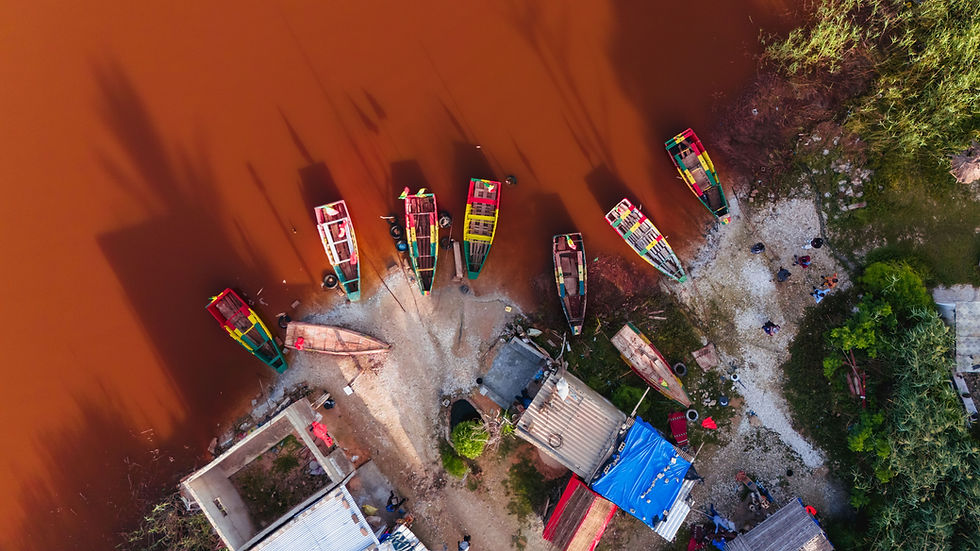
Climate displacement remains a critical issue in Senegal. A decade after floods destroyed part of the country’s coastal region, the international community has highlighted that many families are still living without adequate housing. Although some progress has been made, urgent action is still needed.
In 2025, Human Rights Watch published a report analyzing the current situation of climate displacement in Senegal. The study focused on a small community of 1000 people who have been living in a site called Khar Yalla since 2016. They come from the Langue de Barbarie, a narrow coastal area located about 5 kilometers from their current settlement and considered one of the African regions most affected by the impacts of climate change, including sea level rise. Between 2015 and 2016, coastal flooding destroyed homes and villages in the area, forcing residents to relocate. More than 300 families, representing approximately 3200 people, were displaced. Local authorities initially provided temporary shelter by setting up tents in the Langue de Barbarie. Later, some of the displaced families were relocated to Khar Yalla as a temporary measure, with the expectation that their home would soon be rebuilt.
The 2025 report highlighted that the Senegalese government had yet to provide a lasting solution for the internally displaced peoples. For more than a decade, these families have lived in conditions that violate several of their fundamental rights, including the rights to a decent standard of living, adequate housing, access to health care, education, and participation in cultural activities. Several displaced residents described the situation by saying that they “feel forgotten by decisionmakers.”
In March 2026, Human Rights Watch visited the area again, and a new assessment showed that some progress had been made since the previous year. For example, Senegal has invested more than other countries affected by climate change in supporting displaced communities. Currently, about 12 out of 68 households in Khar Yalla have access to electricity, although many cannot afford the installation costs. In addition, the Senegalese government has recently announced the launch of consultations on a proposed climate change law that could establish the legal framework for a national policy on planned relocation and climate displacement.
Despite this progress, the situation remains critical. According to the Internal Displacement Monitoring Center, more than 57000 people in Senegal were displaced by floods in 2024 alone. Moreover, because around 40% of the population in Senegal’s southern coastal regions depend on fishing for employment, relocation has contributed to rising unemployment.
The international community has stressed the importance of addressing the issue. International organizations, including the United Nations, have been working with national authorities to implement projects that provide essential services, such as access to education, to help rebuild displaced communities. Human Rights Watch climate displacement researcher Erica Bower commented: “A decade of living in uncertainty is an unacceptable reality for families already traumatized by climate displacement. The Senegalese government should provide families with the bare minimum for Khar Yalla to feel like home again: permanent permits to regularize their tenure.With political will, Senegal can become a regional and global leader on this critical climate justice issue.”
written by Ludovica Muncibì


Comments